
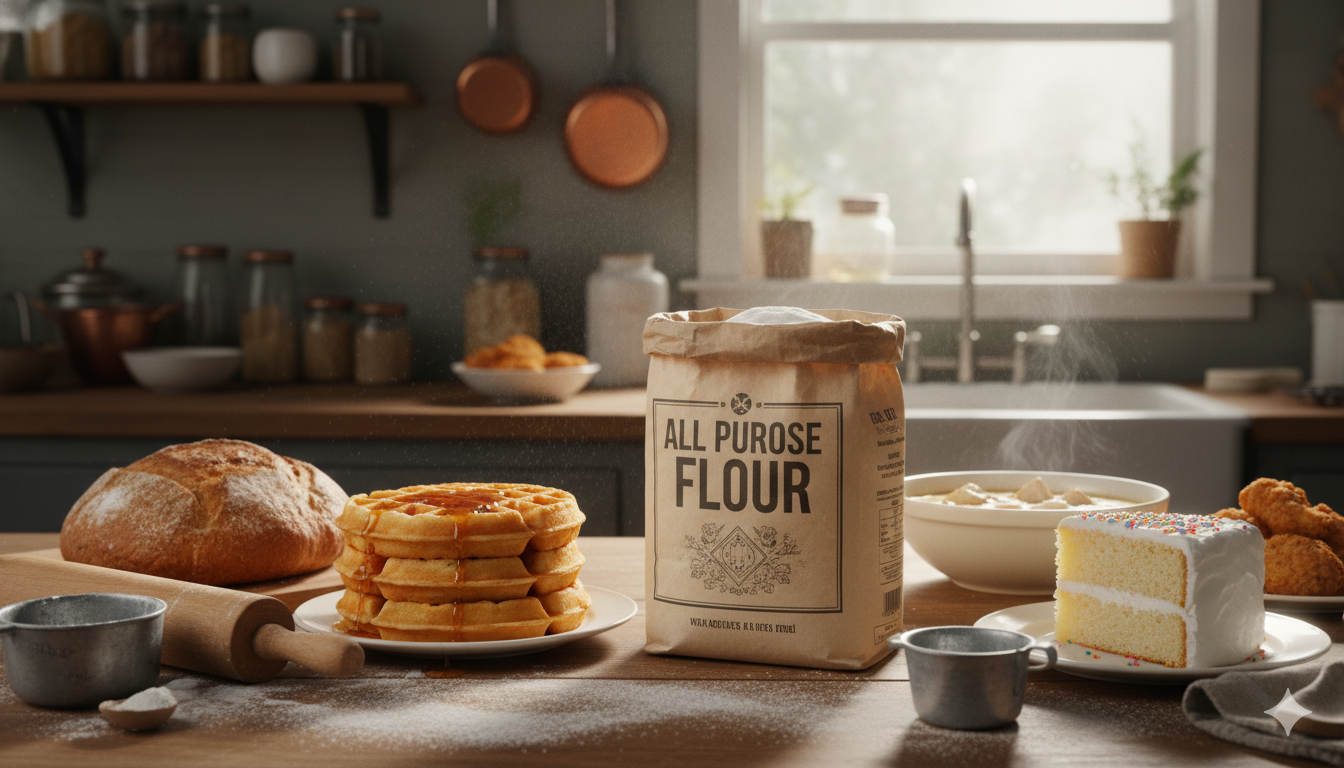
Have you ever wondered what makes your favorite baked goods so soft and delicious? The secret often lies right in your pantry. For generations, home bakers have trusted one staple ingredient to create everything from fluffy birthday cakes to crispy Sunday morning waffles. If you open a kitchen cupboard anywhere in the world, you will likely find a bag of all purpose flour. It is the absolute backbone of everyday baking and cooking. It is a true kitchen workhorse because it can do almost any job you throw at it. Whether you want to bake a loaf of bread, fry some chicken, or thicken a creamy soup, this ingredient is always ready to help. It balances strength and softness perfectly so that your food turns out amazing every single time.
Let us take a friendly journey into the wonderful world of this kitchen essential. We will look at how it is made, why it works so well, and how you can use it like a professional chef. You do not need a fancy culinary degree to understand the magic of baking. All you need is a little bit of curiosity and a bag of high-quality ingredients.
What Is All Purpose Flour Made Of?
To understand this baking staple, we must look at where it comes from. This white powder comes from the fields of wheat that grow tall under the warm sun. Workers harvest the wheat grains and send them to a milling factory. At the factory, big machines grind the wheat kernels into a very fine powder. But not all wheat is exactly the exact same.
Manufacturers blend two main types of wheat to make this product. They mix hard wheat and soft wheat together in a specific ratio. Hard wheat has a lot of protein, which makes things chewy and strong. Soft wheat has less protein, which makes things light and crumbly. By mixing them together, companies create a balanced product that works for almost any recipe. It is the middle ground of the baking world. It is not too strong and it is not too weak. This special blend is why it earns its famous name.
The Simple Science of Gluten and Protein
Baking feels like magic, but it is actually a lot of fun science. The most important thing to know about flour is protein. When you mix this powder with water, two special proteins wake up and join together. Their names are gliadin and glutenin. When they combine, they create something called gluten. Think of gluten like tiny, stretchy rubber bands inside your dough.
These tiny rubber bands hold your bread together and trap bubbles of air. When the air gets trapped, your baked goods rise up high in the oven. If a flour has too much protein, the rubber bands get very tight and tough. If it has too little protein, the rubber bands break and things get mushy. All purpose flour sits right in the sweet spot. It usually has a protein content of about 10% to 12%. This medium amount of protein gives your food enough structure to hold its shape without becoming as tough as leather.
Bleached Versus Unbleached Wheat Options
When you walk down the baking aisle at the grocery store, you will see two main choices. One bag says bleached and the other bag says unbleached. Both are great options, but they go through different steps at the factory. Bleached options are treated with safe, food-grade chemicals to speed up the aging process. This makes the powder look stark white and feel incredibly soft. It also lowers the protein slightly, which is perfect for ultra-tender pie crusts and soft cookies.
Unbleached options age naturally over time in the fresh air. This natural process takes longer, so the powder has a pale, off-white cream color. It keeps a tiny bit more of its natural protein strength. Many professional bakers prefer unbleached types for yeast breads and pizza dough because it provides a better chew. In most home recipes, you can use either type without any issues. Just pick the one that fits your personal lifestyle and baking goals.
How This Kitchen Staple Differs From Bread Flour
It is easy to get confused by all the different bags of white powder in the store. Bread flour is a very specific product made almost entirely from hard winter wheat. Because it uses hard wheat, it has a much higher protein level, usually around 13% to 14%. This extra protein creates a massive amount of strong gluten. It is designed to make chewy artisan loaves, bagels, and soft pretzels that can hold a lot of heavy yeast bubbles.
If you try to make a delicate birthday cake with bread flour, your cake will turn out heavy, dense, and tough to chew. That is because the gluten bands are simply too strong for a cake. On the flipped side, all purpose flour keeps things balanced. It has just enough strength to hold up a loaf of sandwich bread, but it stays gentle enough to keep a vanilla cupcake soft and airy. It saves you from buying five different bags of ingredients.
The Difference Between Cake Flour and Everyday Flour
On the other end of the baking spectrum, we find cake flour. This product is made exclusively from soft summer wheat. It goes through a very fine milling process and has a low protein content of about 7% to 8%. It is often bleached to weaken the gluten even further. This creates a powder that is as soft as silk. When you use it, your baked goods become incredibly tender, light, and velvety. It is the ultimate choice for sponge cakes and delicate pastries.
However, cake flour is far too weak for everyday cooking tasks. If you try to bake a loaf of crusty bread with it, the dough will collapse into a flat pancake because there is not enough gluten to hold the structure. All purpose flour acts as the perfect bridge between cake flour and bread flour. It gives you a reliable middle option so you can bake a decent cake or a good loaf of bread using the exact same bag.
Why It Is the Ultimate Choice for Crispy Cookies
Almost everyone loves a warm chocolate chip cookie straight out of the hot oven. Achieving the perfect cookie texture is all about balancing chewiness with a crisp edge. If you use a ingredient that is too weak, your cookies will melt into a flat, greasy puddle on the baking sheet. If you use something too strong, your cookies will turn into puffy, dry biscuits that taste like bread.
Using all purpose flour ensures that your cookies spread just the right amount while keeping a soft, chewy center. The medium protein content allows the butter and sugar to melt beautifully while holding the chocolate chips in place. Over the years, I have baked thousands of cookies with my family. We always return to this standard pantry staple because it yields a dependable crunch on the outside and a gooey inside every single time. It is truly foolproof for holiday baking.
Thicken Your Soups and Sauces with Ease
This amazing ingredient is not just for sweet desserts and morning baking. It is also an incredible tool for savory cooking in your kitchen. Have you ever wondered how chefs make gravy so thick and smooth? They use a classic French cooking trick called a roux. A roux is just a simple mixture of equal parts fat and flour cooked together in a warm pan.
You start by melting a couple tablespoons of butter in a saucepan over medium heat. Next, you sprinkle in some all purpose flour and whisk it into a smooth paste. As it cooks for a minute, the raw starch flavor disappears. Then, you slowly pour in milk or chicken broth while whisking constantly. The starch granules absorb the liquid and swell up, turning a thin liquid into a rich, velvety sauce. It is the secret base for homemade macaroni and cheese, cozy autumn stews, and creamy potato soups.
Simple Guidelines for Measuring Accurately
The biggest mistake people make in the kitchen happens before they even turn on the oven. They measure their ingredients incorrectly. If you scoop a measuring cup directly into a packed bag of flour, you will press too much powder into the cup. This adds extra weight to your recipe, making your dough dry, crumbly, and heavy. Your cakes will turn out dry instead of moist.
The best way to measure without a digital scale is the “spoon and level” method. First, use a spoon to fluff up the powder inside your container so it is light and airy. Next, gently spoon the powder into your measuring cup until it forms a little mound at the top. Finally, take the flat back of a dinner knife and scrape it across the top edge of the cup to remove the excess. This simple trick keeps your measurements light and accurate every time.
The Essential Baking Flour Comparison Table
To make things incredibly simple to understand, let us look at how the most common types of baking powders compare to each other. This clear table breaks down the protein levels, best uses, and textures so you can choose the perfect option for your next kitchen project.
| Flour Type | Average Protein Level | Best Culinary Uses | Expected Final Texture |
| Cake Flour | 7% – 8% | Sponge cakes, soft biscuits, delicate pastries | Ultra-light, tender, crumbly, and velvety |
| All Purpose Flour | 10% – 12% | Cookies, quick breads, pancakes, sauces, gravies | Balanced, reliable, medium chew, soft crumb |
| Bread Flour | 13% – 14% | Artisan yeast breads, pizza crusts, bagels | Very chewy, strong structure, open air holes |
| Self-Rising Flour | 8% – 9% | Southern biscuits, quick pancakes, easy scones | Puffy, light, rises automatically without yeast |
How to Safely Store Your Pantry Stash
Once you bring a fresh bag home from the grocery store, you need to keep it safe from bugs, moisture, and air. Paper bags from the store can easily tear or let in humidity. If moisture gets inside the bag, the powder will clump up and spoil quickly. Air can also cause the natural oils in the wheat to go bad over time, which creates an unpleasant, sour smell.
The best solution is to dump the powder into a clean, airtight plastic or glass container with a tight lid. Keep this container in a cool, dark, and dry place like a pantry cupboard or a kitchen drawer. Kept away from heat and sunlight, your all purpose flour will stay perfectly fresh for up to one full year. If you do not bake very often, you can even store the sealed container inside your refrigerator or freezer to extend its shelf life even longer.
Frequently Asked Questions
Can I substitute all purpose flour for bread flour?
Yes, you can substitute them in most everyday recipes. However, your bread might be a little less chewy and a bit shorter because it has less protein. If a recipe calls for bread flour and you only have standard flour, add an extra tablespoon of dough kneading time to help build up that crucial gluten strength.
What is the difference between this and self-rising flour?
Self-rising flour has two extra ingredients already mixed into the bag. It contains baking powder and a pinch of salt. It is designed for quick biscuits and pancakes where you want a fast rise. You should not use all purpose flour as a direct swap unless you add your own baking powder and salt to the bowl.
Is this product healthy to eat every day?
It is a wonderful source of quick carbohydrates that give your body energy to move and play. Most modern brands add healthy vitamins and minerals back into the powder during production, like iron and B vitamins. For a balanced lifestyle, enjoy it alongside plenty of colorful fruits, fresh vegetables, and lean proteins.
Why do recipes say to sift the flour?
Sifting means shaking the powder through a fine wire mesh strainer. This step removes any large lumps that formed while sitting in the paper bag. It also traps air between the tiny particles, making the powder lighter. This helps it blend smoothly into delicate cake batters without leaving behind dry, white pockets.
How do I know if my flour has gone bad?
Fresh white powder should have almost no smell at all, or a very faint, sweet wheat aroma. If you open your container and smell something sour, musty, or like old cardboard, it is time to throw it away. Always check for any tiny dark spots or movement, which could mean tiny pantry pests have moved in.
Conclusion
Baking is a beautiful way to show love for your family and friends. It turns simple ingredients into warm memories that stay with us for a lifetime. Now that you know the simple science and secrets behind all purpose flour, you can step into your kitchen with total confidence. You know how to measure it properly, how to store it safely, and how it compares to other options on the grocery shelf.
The best way to learn is simply to practice. Do not be afraid to make a little bit of a mess with a dusting of white powder on your kitchen counter. Grab a bowl, measure out your ingredients carefully, and start baking something delicious today. Your kitchen is your playground, and this classic staple is always there to help you create something truly wonderful.