
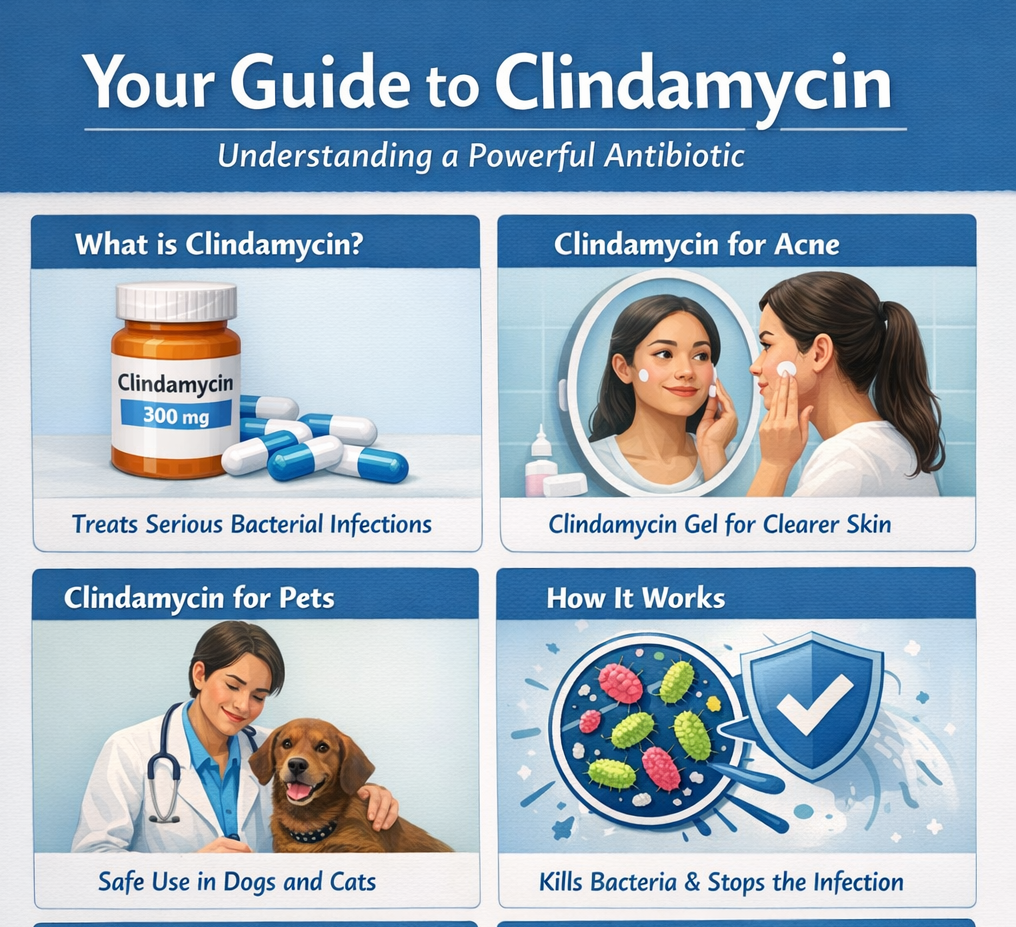
Your Guide to Clindamycin
Welcome to your trusted resource on clindamycin, a powerful antibiotic that fights serious infections. You might have heard about clindamycin for acne or been prescribed clindamycin 300 mg. This guide is designed for you. We will explore everything in simple, clear language. What is this medication truly used for? How does clindamycin gel work on your skin? Is clindamycin for dogs safe? We answer all this and more. Our goal is to empower you with knowledge. Understanding your treatment leads to better health outcomes.
What Is Clindamycin? A Powerful Antibiotic Explained
Clindamycin is a lincomycin antibiotic. It fights bacteria causing infections in your body. Think of it as a targeted warrior. It stops bacteria from making proteins they need to grow and multiply. This action makes it incredibly effective. Doctors often turn to this medicine for serious conditions. It treats infections other antibiotics might not handle well. The medication comes in several forms. You can find it as an oral capsule, a topical gel, and a solution. Each form serves a specific purpose. Oral clindamycin 300 mg capsules tackle internal issues. Topical forms like a clindamycin cream address skin problems directly. It’s a versatile and crucial tool in modern medicine.
Clindamycin Phosphate: The Topical Powerhouse
Clindamycin phosphate is the form used on your skin. It’s the active ingredient in many topical treatments. This compound is perfect for fighting bacteria in your pores. When applied, your skin converts it into active clindamycin. It then gets to work right where the problem is. This means powerful, localized action with less systemic exposure. You will commonly see it in clindamycin gel and clindamycin phosphate topical solution. These are frontline treatments for acne. They reduce inflammation and kill acne-causing bacteria. Using clindamycin phosphate topical solution with a cotton pad is easy. It’s a simple step that can make a dramatic difference in your skin’s clarity and health.
What Is Clindamycin Used For? Top Medical Uses
Doctors prescribe clindamycin for various bacterial infections. Its strength makes it a go-to choice. A primary use is for severe skin infections, like cellulitis. It’s also vital for treating abscesses in the lungs or teeth. For women, it can treat certain serious vaginal infections. Surgeons use it before operations to prevent infections. Dentists may prescribe it for tooth infections, especially for patients allergic to penicillin. Of course, a very common use is for inflammatory acne. Clindamycin for acne works by calming redness and fighting P. acnes bacteria. It’s important to remember it only works on bacterial infections. It will not help with viral sicknesses like the flu or a cold.
Understanding Clindamycin 300 mg: The Oral Dosage
The clindamycin 300 mg capsule is a standard oral dose for adults. This form tackles infections from the inside out. Your doctor will decide the exact dosage and how long you need it. You might take one capsule every six or eight hours. It’s crucial to follow the timing instructions exactly. This keeps a steady level of medicine in your bloodstream. Always take it with a full glass of water. This helps prevent a common side effect: throat irritation. Never skip a dose, and finish the entire prescription. Stopping early can let the infection come back, stronger and harder to treat. If you miss a dose, take it as soon as you remember, unless it’s almost time for the next one.
Clindamycin Gel and Cream: A Guide to Topical Forms
Topical clindamycin is a skincare superhero. Clindamycin gel is typically clear and light. It’s great for oily or combination skin. Clindamycin cream is thicker and more moisturizing. It’s often better for dry or sensitive skin types. The clindamycin phosphate topical solution is a liquid applied with a dropper or pad. To use any form, first wash your face gently with a mild cleanser. Pat it dry completely. Apply a thin layer to the entire affected area, not just single pimples. This prevents new blemishes from forming. Use it once or twice daily as directed. Most people tolerate it well, but some minor dryness or peeling can occur initially.
Complete Detailing Table: Clindamycin Forms and Uses
| Formulation | Common Brand Names | Primary Uses | Typical Dosage | Key Considerations |
|---|---|---|---|---|
| Clindamycin 300 mg (Oral Capsule) | Cleocin | Serious internal infections (lungs, skin, bones), dental abscesses | 150-450 mg every 6-8 hours for adults | Take with full glass of water; complete full course; watch for GI side effects. |
| Clindamycin Phosphate Topical Gel (1%) | Cleocin T, Clindagel | Inflammatory acne vulgaris | Apply thin layer to affected area once or twice daily | Use on clean, dry skin; often paired with benzoyl peroxide; may cause dryness. |
| Clindamycin Phosphate Topical Solution (1%) | Cleocin T Solution | Inflammatory acne vulgaris | Apply with pad to affected area once or twice daily | Liquid form; can be drying; avoid contact with eyes and mucous membranes. |
| Clindamycin Phosphate Vaginal Cream (2%) | Cleocin | Bacterial vaginosis (BV) | One full applicator intravaginally at bedtime for 3-7 days | For vaginal use only; complete full course even during menstruation. |
| Veterinary Formulations (Oral) | Antirobe, Clindasec | Canine wounds, dental infections, osteomyelitis | Varies by weight; typically 5-10 mg/lb every 12 hours | Prescription only; give exactly as directed by veterinarian; monitor for GI upset. |
Frequently Asked Questions
You now have a powerful understanding of clindamycin. From clindamycin phosphate solutions for clear skin to the vital clindamycin 300 mg dose for serious infections, knowledge is your best tool. Remember, this antibiotic is a potent ally when used correctly. Always partner with your doctor or dermatologist. Follow their instructions closely, report any concerns, and complete every treatment. Whether exploring clindamycin for acne or understanding its use for pets, you are taking charge of health. We hope this guide has answered your questions and provided clarity. For personalized advice, always consult your healthcare professional.
You may also like to read About: Clindamycin