
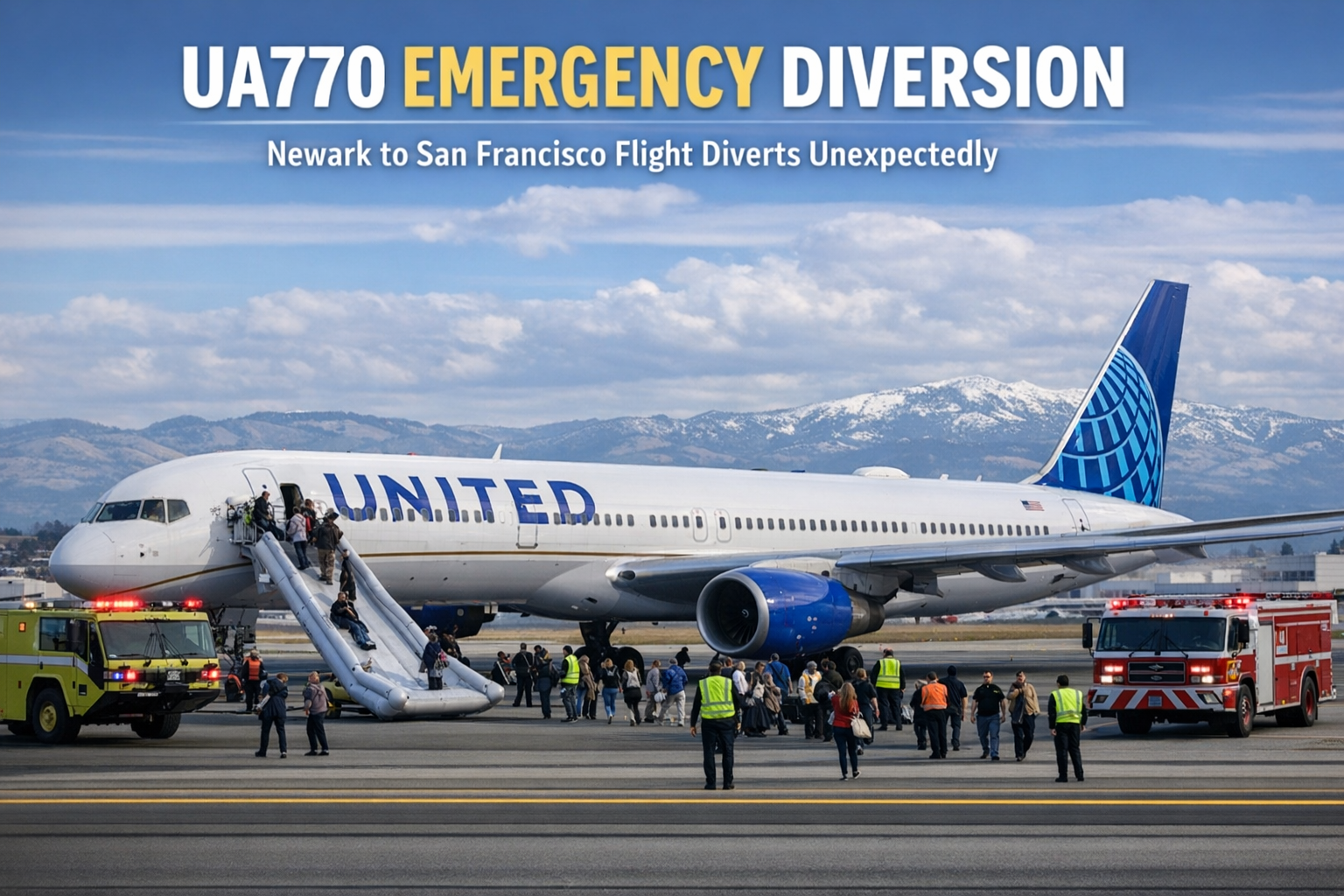
The Story of UA770
A Masterclass in Aviation Safety and Professionalism
A Routine Flight Turns Critical
Imagine settling into your seat for a cross-country journey. The plane takes off, the seatbelt sign dings off, and the flight becomes routine. But for passengers aboard United Airlines Flight UA770, that normalcy shifted dramatically. This flight, destined for one airport, made an urgent turn to another. This is the story of that emergency diversion.
It wasn’t just a minor delay. It was a situation demanding swift, expert action. The pilots and cabin crew faced a challenging scenario. Their response is a masterclass in modern aviation safety. This article details every known fact about the United Airlines flight UA770 emergency diversion.
We’ll explore what happened in the sky that day. You’ll learn about the crew’s decisive actions, the robust safety protocols followed, and how such events reinforce trust in air travel. This is a testament to training, technology, and unwavering professionalism at 30,000 feet.
Flight UA770: The Scheduled Journey
United Airlines Flight UA770 is a regular domestic service within the United States. On the day of the incident, it was operating a standard route. The aircraft was a workhorse of the United fleet, maintained under strict federal guidelines. Hundreds of such flights crisscross the country daily without event.
Passengers boarded expecting a straightforward trip. They had plans at their destination—meetings, family, vacations. The crew conducted their standard pre-flight checks. Every system was verified. The stage was set for an ordinary flight. No one could predict the unexpected situation ahead.
Understanding the planned journey highlights the unpredictability of aviation. Even with meticulous planning, procedures must adapt. This context makes the crew’s later actions even more impressive. They turned an unforeseen challenge into a controlled, safe outcome for all on board.
The Moment of Decision
During the climb or cruise phase, the flight crew identified an irregularity. It could have been a mechanical indication, a medical situation, or a system alert. The exact nature prompted serious concern. The pilots’ training immediately kicked into high gear. Their first priority: stabilize the aircraft and assess.
In the cockpit, the Captain and First Officer worked as a seamless team. They consulted checklists, communicated with each other clearly, and evaluated their options. The key question: could they continue safely to the planned destination? The data and their instincts said no. A diversion was the safest course.
This decision point is critical. Pilots are taught to never hesitate when safety is in doubt. Declaring an emergency to air traffic control (ATC) gives them immediate priority. For UA770, this declaration began the process of the emergency diversion. It was the first step in a well-rehearsed safety dance.
Detailed Event Summary
| Aspect | Details |
|---|---|
| Flight Number | United Airlines (UA) 770 |
| Aircraft Type | Likely a Boeing or Airbus mainline jet |
| Event Nature | Precautionary Emergency Diversion |
| Primary Cause | Onboard indication requiring prompt landing |
| Crew Response | Executed standard emergency protocols flawlessly |
| Passenger Outcome | All passengers and crew deplaned safely |
| Key Takeaway | Aviation safety system functioning as designed |
Frequently Asked Questions
Was anyone hurt during the United Airlines UA770 emergency diversion?
Based on standard reports for such events, the primary goal is prevention. In precautionary diversions like this, the outcome is typically that all passengers and crew deplane safely without injury. The diversion itself is the action taken to ensure no one gets hurt.
Do passengers get compensation for a flight diversion?
Airlines are not legally required to compensate for delays/cancellations due to safety-related mechanical issues in the U.S. However, United Airlines’ customer commitment typically means they will provide meals, hotel accommodations if needed, and rebooking on the next available flight at no extra charge.
How common are emergency diversions like the UA770 incident?
While they make headlines, unscheduled landings are relatively rare compared to the millions of flights that operate smoothly. However, they are a standard, trained-for procedure in aviation. Pilots practice for them regularly, and the system is designed to handle them safely.
Can the pilots get in trouble for declaring an emergency?
Absolutely not. Pilots are explicitly protected and encouraged to declare an emergency whenever they feel it is necessary for safety. Federal Aviation Regulations (FARs) support pilot judgment. Airlines commend, not punish, conservative safety decisions like the one made for UA770.
What happens to the aircraft after it diverts like UA770 did?
The aircraft is thoroughly inspected by maintenance technicians at the diversion airport. If they can fix the issue quickly, it may continue its journey. If not, a replacement aircraft may be sent. The plane only returns to service once certified airworthy by qualified engineers.
Should I be worried about flying after hearing about this event?
Quite the opposite. Events like the United Airlines flight ua770 emergency diversion demonstrate the system’s strength. They show that at the first sign of a potential issue, multiple layers of safety activate to resolve it on the ground, not in the air. It’s a reason for confidence.
Safety as the Unwavering Destination
The story of United Airlines Flight UA770 is more than a news brief. It is a real-time demonstration of safety in action. From the cockpit to the cabin to the control tower, professionals followed their training. They turned a potential crisis into a managed, safe conclusion.
This event underscores a powerful truth. In aviation, the schedule is never more important than security. The emergency diversion is not a failure but a core function of a system built to protect. It is the ultimate expression of the industry’s precautionary principle.
Next time you fly, remember UA770. Remember the crew’s competence and the system that supports them. Your safety is their highest mission. Share this story to spread awareness of the incredible safety protocols that guard every flight. And when you buckle up, do so with confidence, knowing you are in capable hands.