
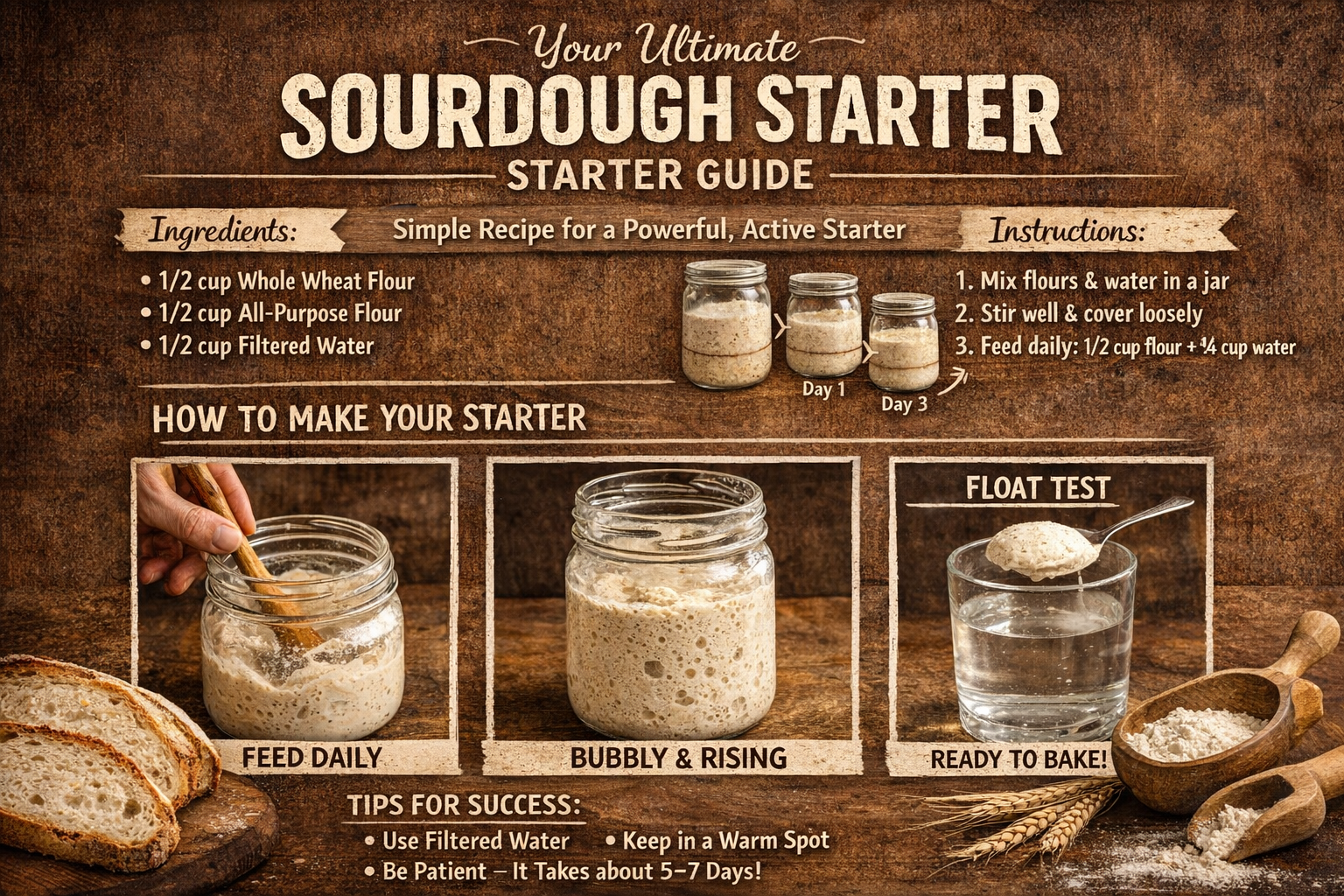
Your Ultimate Sourdough Starter Master Guide
Unlock the secret to perfect homemade bread with our definitive guide to creating and maintaining a powerful, active sourdough starter from scratch.
Welcome to the Art of Sourdough
There’s something truly magical about baking your own bread. The incredible aroma, the chewy crust, and that unique tangy taste all start with one key ingredient: a vibrant sourdough starter. Think of your starter as the living, breathing heart of your future loaves. It’s a simple mix of flour and water, teeming with natural yeast and good bacteria.
This guide is your friendly, step-by-step companion. We will walk you through exactly how to make a sourdough starter from scratch. It’s easier than you think! You’ll learn how to care for it, troubleshoot common issues, and use it to create amazing baked goods. Let’s roll up our sleeves and create a baking companion that will last for years.
What is a Sourdough Starter?
Let’s break it down simply. A sourdough starter is a fermented mixture. It contains just flour and water. But when combined, they capture wild yeast and friendly bacteria from the air around us. This mixture becomes a natural leavening agent. You use it instead of commercial yeast packets to make bread rise.
This living culture gives sourdough its signature slightly sour flavor and fantastic texture. Unlike a single-use packet of yeast, a healthy starter can live forever with basic care. It’s like a low-maintenance pet for your kitchen! Each starter develops its own unique character based on your environment and flour. This makes your baking truly one-of-a-kind.
Why Homemade Starter Wins
Creating your own sourdough starter from scratch is a rewarding experience. First, it’s incredibly cost-effective. You only need two inexpensive ingredients: flour and water. Store-bought versions can be pricey and lack a personal connection. Second, a homemade starter adapts to your specific kitchen’s environment.
It captures the local wild yeast, making your bread uniquely yours. Third, the process teaches you the fundamentals of fermentation. This knowledge empowers you to become a better, more intuitive baker. Finally, there’s a deep sense of pride and accomplishment. You nurtured a living culture yourself! That first loaf made from your own starter is a triumph.
Sourdough Starter Master Timeline
| Day | Action | Ingredients | What to Expect | Pro Tip |
|---|---|---|---|---|
| Day 1 | Initial Mix | 100g WW Flour 125g Warm Water |
Thick paste, no activity | Use glass jar for observation |
| Days 2-3 | Daily Feeding | Discard half, then: 100g AP Flour + 100g Water |
Few bubbles, sweet smell | Mark level with rubber band |
| Days 4-5 | Twice Daily Feeding | Discard half, then: 100g AP Flour + 100g Water |
More bubbles, sour aroma | This is the “ugly” phase – persist! |
| Days 6-7 | Twice Daily Feeding | Discard half, then: 100g AP Flour + 100g Water |
Doubles in size, yeasty smell | Perform float test for readiness |
| Mature | Maintenance | Discard to 50g, then: 100g Flour + 100g Water |
Predictable doubling in 4-8 hours | Room temp for daily use, fridge for weekly |
The Foolproof Starter Recipe
This is the core of your journey—your reliable sourdough starter recipe. We will build it over 7 days. Day 1: In your jar, mix 100 grams of whole wheat flour with 125 grams of lukewarm water. Stir vigorously until smooth. Cover loosely and let it rest in a warm spot (70-75°F is ideal).
Days 2 & 3: You may see some bubbles. Feed it by removing half of the mixture (discard or save for recipes later). Add 100 grams of all-purpose flour and 100 grams of water. Mix, cover, and rest. Days 4, 5, 6 & 7: Feed every 12 hours. The discard-and-feed routine is crucial. You should see more bubbles and smell a pleasant, yeasty aroma.
Mastering the “Discard” Process
“Discard” might sound wasteful, but it’s a vital part of the process. When you feed your sourdough starter, you add fresh flour and water. To prevent it from growing endlessly, you remove a portion first. This removed portion is called “discard.” But don’t just throw it away!
This discard is packed with flavor and can be used in countless recipes. You can make delicious sourdough discard pancakes, crackers, waffles, or even quick muffins. This way, nothing is wasted. The act of discarding also helps control the acidity level and refreshes your culture. It makes room for the fresh food you’re adding.
Expert Answers to Your Questions
Begin Your Sourdough Journey Today
Congratulations! You now hold all the knowledge to create and nurture your own vibrant sourdough starter. This isn’t just about baking bread; it’s about cultivating a living tradition. The simple routine of feeding your starter can be a calming, joyful ritual.
Remember, every baker’s journey is unique. Your starter will have its own personality. Don’t fear the small setbacks—they are just learning moments. Share your first loaf with friends and family. Their wonder will be your greatest reward. Now, it’s your turn.