Introduction
Have you ever taken a sip of water and thought, “Wow, this actually tastes good”? Most people haven’t. Water is usually just… water. But there is one brand that changes that perception for thousands of people every year: Saratoga water. It appears on the tables of fancy restaurants, in the hands of top chefs on TV, and in the refrigerators of people who simply appreciate the finer things in life.
This isn’t just another bottle of H2O. It has a story that stretches back before the Civil War, and a taste that stands out from the crowd. Whether you are a foodie, a health nut, or just someone tired of tap water, this guide will walk you through everything you need to know about Saratoga spring water. We’ll look at where it comes from, why it tastes so clean, and how to pick the right one for your dinner table.
What Exactly is Saratoga Water?
At its core, Saratoga water is a brand of premium spring water that has been bottled in the United States since 1872 . It is known for being “spring-sourced,” which means it comes from a protected underground source rather than a municipal tap water system. What makes it special is what’s inside the water—or, more accurately, what isn’t.
Compared to other spring waters, Saratoga has a very low mineral content. Experts call this “low minerality” or “low TDS” (Total Dissolved Solids) . For the average person, that just means it goes down very smoothly. It doesn’t have that heavy, metallic, or salty taste that some European mineral waters have. It’s light, clean, and refreshing. You can buy it in two main forms: still (flat) and sparkling (bubbly). Both have the same natural spring origin, just with bubbles added to the second one.
A Sip Back in Time: The 150-Year History
The story of Saratoga water is as rich as the mineral deposits it flows through. Long before it was bottled, Native American tribes knew about the healing springs in what is now Saratoga Springs, New York. They considered the land and its bubbling waters to be sacred . In 1771, Sir William Johnson, a European settler, was reintroduced to the springs, and he helped spread the word about these magical, fizzy waters .
By the 1800s, Saratoga Springs had become a massive tourist destination. It earned the nickname “Queen of Spas” . Rich and famous people would travel from New York City and beyond to “take the cure.” This meant drinking and bathing in the mineral waters to fix stomach problems, skin issues, and general fatigue . It was believed that the water from springs like the “Union Spring” had strong medicinal qualities because of the iron, sodium, and iodine . In 1872, a group of businessmen decided to start bottling this magic, founding the company we know today .
Where Does It Come From Today?
This is where the story gets a little tricky, and it’s a detail that surprises many loyal fans. While the brand was born in Saratoga Springs, New York, the water in your bottle today might not come from there. Because the company has grown and changed hands over the years, the sourcing has changed too. Today, the company that owns Saratoga Spring Water also owns other brands like Poland Spring .
Depending on which bottle you buy, your Saratoga water might actually be sourced from springs in Maine or Vermont . Some plastic bottles even indicate the water comes from Forestport, New York . However, the company ensures that no matter the geographic source, the water maintains the low mineral profile and crisp taste that the brand is famous for. So, while the “Saratoga” name is about the brand’s heritage, the liquid inside is often a blend or sourced from other protected springs in the Northeast.
Saratoga Water vs. Regular Bottled Water
What makes this brand different from the store-brand gallon jug? The biggest difference is the philosophy. Regular bottled water, often labeled “purified drinking water,” is usually just tap water that has been filtered. It’s stripped of everything, good and bad, to make it “clean.”
Saratoga spring water, on the other hand, is celebrated for what it keeps. It contains natural minerals that it picks up as it flows through underground rocks. These minerals aren’t just for flavor; they contribute to the “mouthfeel.” Drinkers often describe Saratoga as feeling “smooth” or “creamy” compared to the sharp taste of distilled waters . Furthermore, while tap water can vary in taste depending on the season or how it’s treated, a premium spring water offers a consistent taste profile. It’s a choice for people who see water as part of the meal, not just a thirst-killer.
The Taste Test: Still vs. Sparkling
If you are standing in the store trying to decide which type to buy, here is a simple breakdown of what to expect.
Saratoga Still Water is often described as having a “slightly sweet” flavor with a clean finish . It doesn’t have a heavy aftertaste. The mouthfeel is “light and creamy,” which sounds weird for water, but you notice it when you sip it side-by-side with a budget brand. It just feels softer . Because it’s so neutral, it’s often recommended for pairing with delicate foods like sushi or raw oysters . It cleanses the palate without scaring away the taste of the fish.
Saratoga Sparkling Water is a different beast entirely. It has a lot of fizz—what experts call “uplifting bubbles” . The flavor is clean and slightly sweet, just like the still version. Reviewers online rave that it is “super clean and refreshing,” with just the right amount of bubbles . It’s perfect for cutting through rich foods or simply enjoying as a sophisticated soda alternative.
Why Chefs Love Saratoga Water
Have you ever watched a cooking show like Top Chef and noticed the blue bottles on the judge’s table? That’s Saratoga. The brand has a long-standing relationship with the culinary world. But why do chefs care so much about water?
In fine dining, every ingredient matters. Chefs believe that the water you drink during a meal should act like a palate cleanser, not a flavor mask. Because Saratoga water has such low minerality, it never overpowers the food or the wine . A high-mineral water can clash with a delicate white wine or a light sauce. Saratoga is neutral enough to complement and enhance, which is exactly what a sommelier or chef wants at a five-star table. It respects the food.
Understanding Mineral Content: The Terroir of Water
Just like wine or coffee, water has a terroir—a taste of the place it comes from. This is measured by Total Dissolved Solids (TDS). Saratoga water has a TDS level between 30 and 44 parts per million . To put that in perspective, some famous European mineral waters can have TDS levels over 1,000.
Here’s what that low number means for you. The main minerals found in this water include calcium (good for bones), magnesium (great for muscle recovery), and a small amount of sodium . It also contains silica, which is thought to support healthy skin and hair . Because the numbers are so low, it’s an excellent choice for everyday hydration. You get the benefits of natural minerals without the strong, medicinal taste found in more intense mineral waters.
Health and Wellness Benefits
People have been visiting Saratoga Springs for their health for over two hundred years. While we don’t rely on spring water to cure diseases like they did in the 1800s, drinking high-quality water still has real benefits.
The bicarbonates in the water can help soothe your stomach and aid in digestion, especially after a big meal . The magnesium is a natural relaxant, helping to ease muscle cramps and promote a sense of calm . Furthermore, because the water is naturally alkaline, it can help balance the body’s pH. For athletes or active people, the combination of minerals helps replenish electrolytes lost during a workout, without all the sugar found in sports drinks . Drinking Saratoga is an easy way to support your body’s daily functions while enjoying a great taste.
The Iconic Blue Bottle
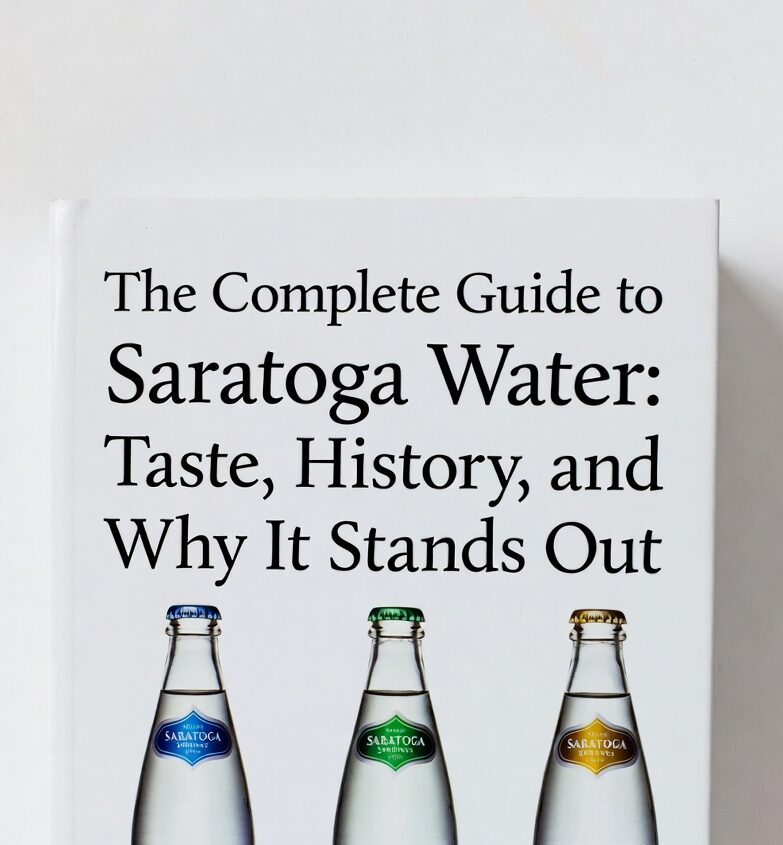
You can probably recognize a bottle of Saratoga water from across the room. That signature cobalt blue glass bottle is a design icon . It isn’t just for looks, though it certainly adds a touch of class to any table. The colored glass helps protect the water from light, which can sometimes alter the taste over time.
Recently, the company has also started offering their sparkling water in 28 oz PET plastic bottles . While some purists prefer the glass because it feels more premium and keeps the water colder, the plastic option is much lighter and safer for picnics, pool days, or tossing in your gym bag. Reviewers note that the water inside tastes just as good, even if the bottle doesn’t feel as fancy .
How to Enjoy Saratoga Water at Home
You don’t need to be a celebrity chef to enjoy good water. Here are a few easy ways to bring a little luxury into your daily life with Saratoga.
First, try pairing it with food. Grab a bottle of the still water the next time you order takeout sushi. Take a sip between pieces of salmon or tuna. You’ll notice the flavors of the fish pop more without the greasy feeling staying on your tongue. Second, use the sparkling water as a cocktail mixer. Because the bubbles are so fine and the flavor is clean, it makes an incredible gin and tonic or a simple spritzer with a splash of cranberry juice and a lime wedge. It elevates a simple drink to something special without any added sugar or artificial flavors.
Finally, make it a daily habit. Keep a big bottle of the sparkling on your desk instead of soda. The fizz satisfies that craving for something exciting, and the natural minerals will keep you hydrated without the caffeine crash.
Frequently Asked Questions
Is Saratoga water the same as Saratoga Springs water?
Usually, yes. The brand “Saratoga Spring Water” refers to the bottled water you buy in stores. “Saratoga Springs” is the city in New York where the brand originated. However, due to the brand’s growth, the actual water source today might be from other springs in the Northeast, though it still carries the same brand name .
Does Saratoga water have any calories or sugar?
No. Saratoga Spring Water is just that—water. It contains zero calories, zero sugar, and zero artificial ingredients. The minerals are naturally occurring.
Is the sparkling water naturally carbonated?
The water from the springs is naturally carbonated underground, but by the time it is bottled, the carbonation levels are adjusted. The sparkling water you buy has had carbonation added back to it to ensure every bottle has the same perfect level of fizz.
Where can I buy Saratoga water?
You can find it in many major grocery stores, specialty food markets, and online retailers. It is also a staple in many upscale hotels and restaurants. If your local store doesn’t carry it, you can often order it directly from the brand’s website.
Is the water in the plastic bottle the same quality as the glass?
Yes. The water itself is the same high-quality spring water. The plastic bottles are designed for convenience and portability, while the glass bottles are preferred for the dining table due to their aesthetic and ability to keep the water colder longer .
Does Saratoga water expire?
Water doesn’t expire, but the bottle does. The plastic or glass bottles have a “best by” date printed on them. This date is more about the packaging than the water. Over many years, plastic can start to leak chemicals into the water, which is why a date is suggested for optimal taste and safety.
Conclusion: Is Saratoga Water Right for You?
After diving into the history and taste profile, the question remains: should you make the switch? If you are someone who drinks a lot of water, or if you simply want to enjoy your meals more, the answer is likely yes. Saratoga water offers a drinking experience that turns a basic necessity into a moment of pleasure. Its smooth, clean taste makes hydration easy, and its low mineral profile means it pairs with everything from your morning coffee to your evening wine.